Introduction: The Anxiety of "Missing Out"
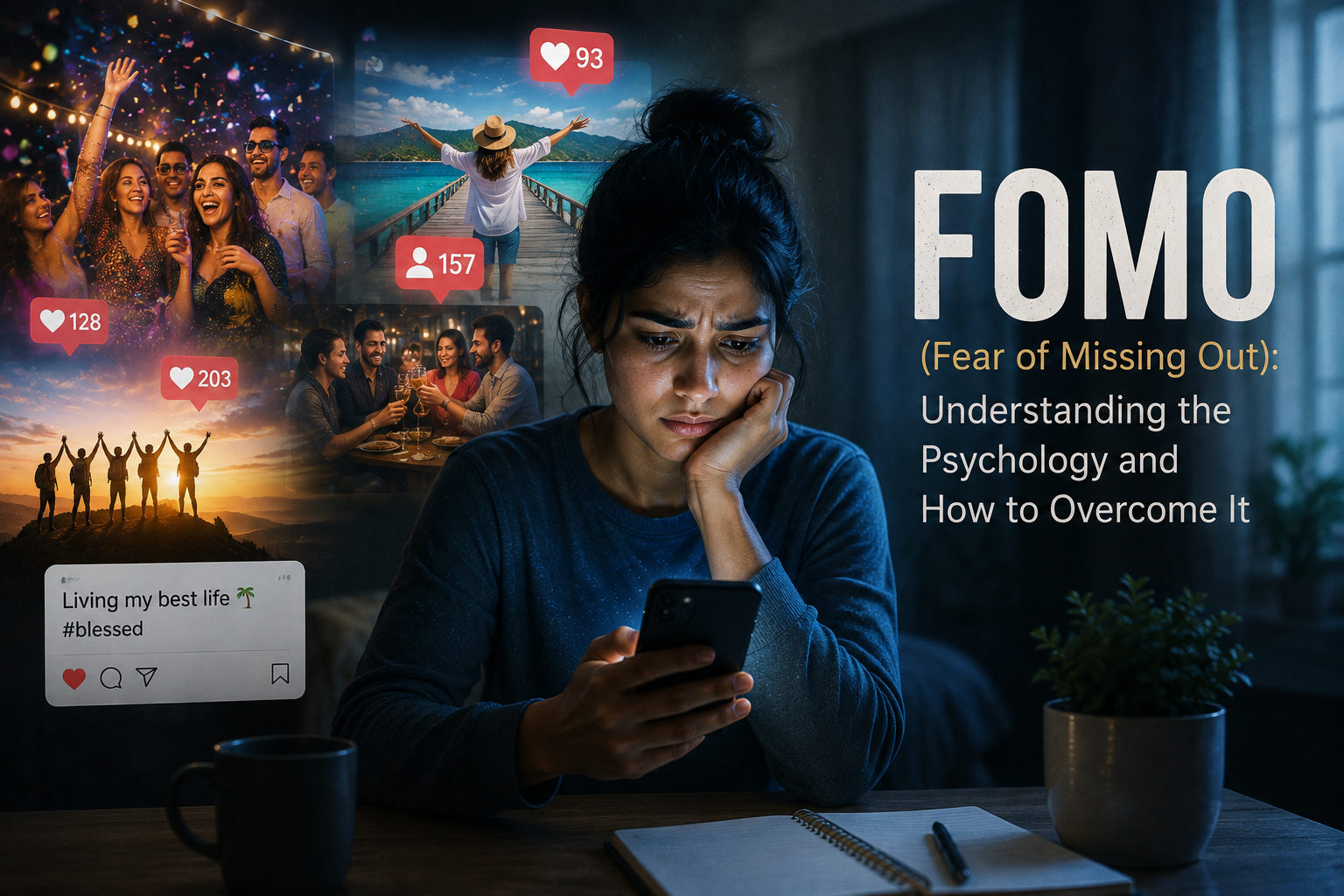
You're lying in bed, ready to sleep, when you open Instagram one last time. Suddenly you see photos from a party you weren't invited to, a group trip your friends took without you, or a colleague's exciting new job announcement. Within seconds, a familiar knot forms in your stomach. Your mind starts racing: Why wasn't I there? Am I being left out? Is everyone else living a better life than me?
This uncomfortable, anxious feeling has a name: FOMO, or Fear of Missing Out. While the term has become a popular buzzword, FOMO is a genuine, well-documented psychological phenomenon that affects millions of people worldwide—and in the age of social media, it has become more intense and more constant than ever before.
In this article, we'll explore what FOMO really is, the psychology and neuroscience behind it, how it shows up in daily life, who is most vulnerable to it, and—most importantly—practical, research-backed strategies to overcome it.
What Is FOMO, Exactly?
FOMO is defined as the pervasive apprehension that others might be having rewarding experiences from which one is absent. It's the anxious, uneasy feeling that everyone else is doing something more exciting, more meaningful, or more fun than you are, right now, while you're missing it.
While the feeling of FOMO has probably existed for as long as humans have lived in social groups, the term was popularized in the early 2000s and has grown dramatically alongside the rise of social media. Today, FOMO isn't limited to missing a party—it extends to career opportunities, relationships, travel experiences, financial trends, and even lifestyle choices.
The Psychology Behind FOMO
Rooted in Our Evolutionary WiringFOMO isn't just a modern, superficial anxiety—it's deeply rooted in human evolutionary psychology. For most of human history, being excluded from the group meant real danger. Social belonging was directly tied to survival: access to food, protection, and resources depended on being accepted within a tribe or community.
As a result, our brains developed a strong, instinctive drive to monitor our social standing and stay alert to signs of exclusion. In the modern world, this ancient survival mechanism gets triggered constantly—not by real danger, but by a friend's vacation photos or a colleague's promotion announcement.
Psychologist Leon Festinger's social comparison theory explains that humans have an innate drive to evaluate themselves by comparing their own lives, achievements, and experiences to those of others. This comparison helps us understand where we stand socially, but it becomes problematic when the comparisons are constant, one-sided, and based on unrealistic portrayals of other people's lives.
Social media supercharges this process. Instead of occasionally comparing yourself to a handful of neighbors or coworkers, you're now exposed to the curated highlights of hundreds—or even thousands—of people, every single day.
FOMO is closely tied to the same dopamine-driven reward systems that make social media so addictive. Every scroll carries the possibility of discovering something exciting, aspirational, or new. This unpredictability keeps us checking compulsively, driven by an underlying anxiety that we might miss something important if we stop.
How FOMO Shows Up in Everyday Life
FOMO isn't limited to a single area of life. It quietly influences decisions and emotions across many different contexts:
Social FOMO: Anxiety about missing parties, gatherings, or group outings, often fueled by seeing photos or stories from events in real time.
Career FOMO: Feeling anxious about colleagues' promotions, career changes, or entrepreneurial ventures, leading to impulsive job changes or constant dissatisfaction with your current path.
Travel FOMO: Feeling pressure to travel to trending destinations after seeing endless vacation photos, even when it doesn't align with your actual interests or finances.
Financial FOMO: A significant driver of impulsive investment decisions, such as jumping into trending stocks, cryptocurrency, or business opportunities purely because "everyone else is doing it"—often leading to poor financial choices.
Relationship FOMO: Anxiety about being single while friends are in relationships, or worrying that a current relationship isn't as exciting as those portrayed online.
Lifestyle FOMO: Feeling inadequate about your home, possessions, fitness routine, or daily habits after comparing them to idealized content online.
The Mental Health Impact of FOMO
Left unchecked, chronic FOMO can have a real and lasting impact on mental health and overall well-being.
- Increased anxiety and stress: The constant fear of missing something important keeps the nervous system in a heightened state of alertness.
- Diminished self-worth: Repeated comparison to curated, idealized versions of other people's lives can erode confidence and self-esteem over time.
- Compulsive checking behavior: FOMO fuels the urge to constantly check phones and social media, reinforcing addictive usage patterns.
- Poor sleep quality: Late-night scrolling driven by FOMO disrupts natural sleep cycles and reduces overall sleep quality.
- Reduced life satisfaction: Ironically, people with high levels of FOMO often report lower overall satisfaction with their own lives, despite—or because of—their constant awareness of others' experiences.
- Impulsive decision-making: Whether it's financial choices, career moves, or social commitments, FOMO-driven decisions are often reactive rather than thoughtful.
Who Is Most Vulnerable to FOMO?
While FOMO can affect anyone, research suggests certain groups are more susceptible:
- Teenagers and young adults, whose sense of identity and self-worth is still developing and who are often more active on social media
- People with lower self-esteem, who are more likely to seek external validation and engage in frequent social comparison
- Highly social media-active individuals, whose constant exposure to others' curated content amplifies comparison
- People experiencing major life transitions, such as job changes, breakups, or moving to a new city, who may already feel uncertain about their social standing
How to Overcome FOMO: Practical Strategies
Overcoming FOMO doesn't require quitting social media entirely—it requires building awareness and healthier habits around how you engage with it.
- Practice Gratitude Daily: Regularly acknowledging what you already have shifts focus away from what you feel you're missing. Simple practices like writing down three things you're grateful for each day can meaningfully reduce comparison-driven anxiety.
- Limit Social Media Consumption: Set specific times to check social media rather than scrolling reflexively throughout the day. Reducing exposure naturally reduces the frequency of FOMO triggers.
- Curate Your Feed: Unfollow or mute accounts that consistently trigger feelings of inadequacy or comparison. Follow accounts that inspire, educate, or genuinely add value instead.
- Remember the Curation Effect: Consciously remind yourself that what you see online is a highlight reel, not reality. Nobody posts their ordinary Tuesday afternoons, their arguments, their financial stress, or their self-doubt.
- Practice JOMO (Joy of Missing Out): Reframe missing out as an opportunity rather than a loss. Choosing rest, solitude, or a quiet evening at home can be a deliberate, positive choice rather than something to feel anxious about.
- Focus on Your Own Values and Goals: Regularly reflect on what genuinely matters to you, rather than measuring your life against someone else's path. A life built around your own values is far more satisfying than one shaped by comparison.
- Engage in Mindfulness Practices: Meditation and mindfulness exercises help train the brain to stay present, reducing the anxious, future-and-comparison-focused thinking that fuels FOMO.
- Strengthen Real-World Connections: Investing in face-to-face relationships and meaningful in-person experiences reduces reliance on social media for a sense of connection and belonging.
- Seek Professional Support if Needed: If FOMO-driven anxiety is significantly affecting your daily life, mood, or decision-making, speaking with a licensed psychologist or counselor can help you address the underlying patterns.
FOMO vs. JOMO: A Healthier Mindset Shift
In recent years, psychologists and wellness experts have introduced the concept of JOMO—the Joy of Missing Out—as a healthy counterbalance to FOMO. JOMO is about intentionally choosing to disconnect, being fully present in your own life, and finding genuine contentment in your own choices, rather than constantly measuring them against others'.
Shifting from FOMO to JOMO doesn't happen overnight, but with consistent practice, it's possible to retrain your mind to feel genuine peace—rather than anxiety—when you're not constantly plugged into everyone else's experiences.
Frequently Asked Questions About FOMO
Is FOMO a real psychological condition?
FOMO itself is not classified as a clinical diagnosis, but it is a well-documented psychological phenomenon linked to anxiety, social comparison, and problematic social media use.
Does FOMO only affect young people?
No. While teenagers and young adults are often more vulnerable due to higher social media engagement, FOMO can affect people of any age, particularly during major life transitions.
Can taking a break from social media reduce FOMO?
Yes. Studies suggest that reducing social media use, even temporarily, can lower symptoms of FOMO, anxiety, and low mood, while improving overall life satisfaction.
Final Thoughts
FOMO is a deeply human response, rooted in our evolutionary need for social connection and belonging—but in today's hyperconnected digital world, it has become amplified in ways our brains were never designed to handle. Understanding why FOMO happens is the first step toward loosening its grip on your daily thoughts and decisions.
By practicing gratitude, setting intentional boundaries around social media, and focusing on your own values rather than a constant stream of curated comparisons, it's possible to move from a place of anxious comparison toward genuine contentment—embracing not the fear of missing out, but the quiet, grounded joy of being fully present in your own life.