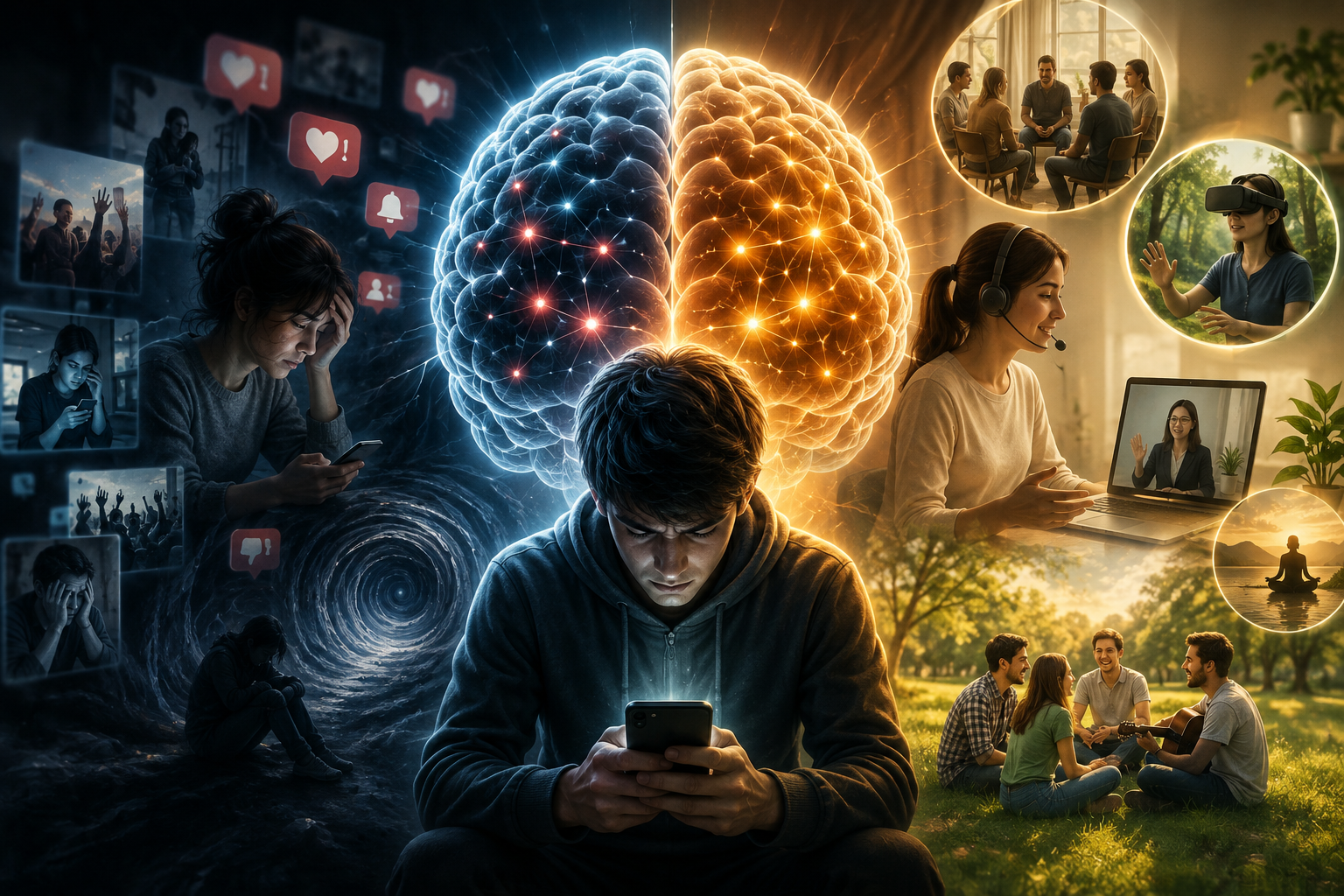
Introduction: The Silent Shift in Human Behavior
Every morning, before our feet even touch the floor, most of us reach for our smartphones. From checking notifications first thing in the morning to scrolling through feeds right before sleep, technology has quietly woven itself into almost every minute of our lives. We check our phones during meals, in traffic, while waiting for the kettle to boil, and even in the middle of conversations. But have you ever paused to think about what all this screen time is actually doing to your brain?
This is where Cyberpsychology comes in—a growing field of study that explores the fascinating, complex relationship between human behavior and the digital world. It examines how the internet, social media, gaming, virtual reality, and artificial intelligence shape the way we think, feel, connect, and even perceive ourselves.
In Sri Lanka, smartphone penetration and social media usage have grown at a remarkable pace over the past decade. Platforms like Facebook, Instagram, TikTok, and WhatsApp have become deeply embedded in daily life—for communication, entertainment, business, and even romantic relationships. But with this digital transformation comes a psychological cost that many of us are only beginning to understand.
This article takes a deep dive into cyberpsychology: how our brains respond to digital stimulation, why social media can quietly erode our mental health, the science behind digital addiction, the strange ways we behave differently online versus offline, and—most importantly—practical, research-backed strategies to protect your digital mental health.
What Exactly Is Cyberpsychology?
Cyberpsychology is the scientific study of the psychological aspects of technology use, particularly the internet and digital devices. It sits at the intersection of psychology, neuroscience, sociology, and computer science, and covers topics such as:
- Online identity and self-presentation
- Social media behavior and mental health
- Internet and gaming addiction
- Cyberbullying and online aggression
- Virtual reality and therapeutic technology
- Human-AI interaction
- Digital wellbeing and screen time management
As our lives become increasingly hybrid—part physical, part digital—cyberpsychology has moved from a niche academic interest to an essential lens for understanding modern mental health. Therapists, researchers, and even tech companies now use cyberpsychological principles to understand user behavior, and increasingly, to help people build healthier relationships with technology.
The Dark Side of Social Media: How Scrolling Affects Mental Health
Social media platforms were built with one core objective: to keep users engaged for as long as possible. While these platforms genuinely help us stay connected with friends, family, and communities—especially valuable for the Sri Lankan diaspora staying in touch with home—they also trigger subtle, often invisible psychological pressures that chip away at our mental well-being over time.
FOMO is one of the most widely recognized psychological effects of social media. Scrolling through highlight reels of vacations, weddings, promotions, and parties can trigger a persistent, nagging fear that everyone else is living a fuller, happier, more exciting life than you are.
This fear isn't irrational—it's rooted in real evolutionary psychology. Humans are wired to care deeply about social belonging and status within their group. But social media distorts this instinct by presenting a constant, unrealistic stream of other people's best moments, 24 hours a day. Over time, this often leads to:
- A diminished sense of self-worth
- Increased anxiety about social standing
- Compulsive checking behavior driven by the fear of "missing something important"
- Difficulty being present and content in real-life moments
Closely linked to FOMO is what psychologists call social comparison theory—our natural tendency to evaluate ourselves by comparing our lives to others. The problem is that people showcase carefully filtered, curated, and often heavily edited versions of their reality online.
Comparing your everyday, messy real life—unpaid bills, ordinary weekends, bad hair days—to someone else's digital "best-of" reel inevitably breeds dissatisfaction and self-doubt. This is especially pronounced among younger users and teenagers, whose sense of identity and self-esteem is still being formed, making them particularly vulnerable to comparison-driven anxiety and body image issues.
Ironically, platforms designed to "connect" people are also linked to rising feelings of loneliness and isolation. Passive scrolling—simply consuming content without meaningfully interacting—has been associated with lower mood and a weaker sense of genuine connection, compared to active engagement like messaging a friend directly or having a real conversation.
The Science of Digital Addiction: Why We Can't Put Our Phones Down
Tech platforms aren't accidentally addictive—they are engineered, often by teams of behavioral scientists and neuroscientists, to keep our attention for as long as possible. Understanding the mechanics behind this can help us take back a sense of control.
Every like, comment, share, and notification releases a small burst of dopamine—the brain's chemical reward signal associated with pleasure and motivation. This is the same neurotransmitter involved in other reward-seeking behaviors.
The unpredictability is key. Because we never know exactly when we'll get a like, a message, or an interesting post, our brains treat every phone check like a small gamble—similar to the psychological mechanism behind slot machines. This variable reward system is one of the most powerful tools in behavioral design, and over time, our brains begin to crave these quick hits, pulling us into a loop of continuous checking and digital addiction.
Doomscrolling—the compulsive habit of endlessly scrolling through negative, distressing, or alarming news—has become a defining behavior of the digital age. Whether it's economic news, political unrest, natural disasters, or global crises, doomscrolling keeps the nervous system on high alert, driving up anxiety levels without offering any resolution or sense of control.
This creates a vicious cycle: the more anxious we feel, the more we scroll in search of answers or reassurance, and the more we scroll, the more anxious we become. Breaking this loop requires conscious, deliberate effort.
While not officially classified as a clinical addiction in the same way as substance addiction, problematic internet and smartphone use shares many behavioral characteristics with addictive patterns, including:
- Preoccupation with being online
- Withdrawal-like irritability when unable to access devices
- Escalating use over time to achieve the same sense of satisfaction
- Neglect of responsibilities, relationships, or sleep
- Repeated, unsuccessful attempts to cut back
Recognizing these patterns in yourself or a loved one is an important first step toward healthier digital habits.
Online vs. Real-Life Behavior: The Psychology Behind the Screen
Why do people often behave so differently behind a screen than they do face-to-face? This is one of the most intriguing areas of cyberpsychology.
The anonymity, physical distance, and lack of immediate consequences provided by the internet weaken normal social boundaries. Psychologists call this the online disinhibition effect.
On one hand, this can be positive: people who are shy, socially anxious, or introverted in real life may speak up more freely online, form friendships more easily, or express parts of their identity they feel unable to show in person.
On the other hand, this same loss of restraint can lead to hostile comments, aggression, and cyberbullying. Without facial expressions, tone of voice, or the immediate emotional feedback of a real conversation, empathy often takes a back seat. It becomes much easier to say something cruel to a username on a screen than to a person sitting across from you—a phenomenon that helps explain the disturbing prevalence of online harassment, trolling, and cyberbullying, including within Sri Lankan online communities.
Cyberpsychology also examines how people curate their online identities—often presenting an idealized version of themselves through filtered photos, carefully worded captions, and selective sharing. While this is a natural form of self-expression, an excessive gap between one's online persona and real self can contribute to identity confusion, anxiety, and a fragile sense of self-worth that depends heavily on external validation (likes, comments, followers).
The Bright Side of Technology: Digital Tools for Mental Health
Technology isn't inherently negative. In fact, when used purposefully and mindfully, it offers powerful, evidence-based tools for mental health support—many of which are especially valuable in a country like Sri Lanka, where access to mental health professionals can be limited outside major urban centers.
Digital spaces make professional counseling and peer support networks accessible to people who might otherwise face geographical, financial, or social barriers to seeking help. Someone living in a remote area, or someone hesitant to visit a therapist in person due to stigma, can now access licensed counselors through video calls, chat-based therapy, or moderated support communities—all from the privacy of their own home.
One of the most exciting applications of cyberpsychology is in clinical treatment. Clinicians increasingly use VR environments to treat phobias, PTSD, and anxiety disorders in safe, controlled settings through a technique called exposure therapy. A patient with a fear of flying, for instance, can be gradually exposed to a realistic virtual airplane cabin, allowing them to build coping skills and reduce their fear response in a controlled, judgment-free environment before facing the real-world situation.
Meditation apps, mood trackers, guided breathing exercises, and digital journaling tools have made self-directed mental health support more accessible than ever. While these tools are not a replacement for professional therapy, they can be valuable complements to a broader mental wellness routine.
Protecting Your Digital Health: Practical Strategies
Maintaining a healthy mind in a hyperconnected world doesn't mean abandoning technology altogether—it means setting intentional, sustainable boundaries. Here are practical, research-backed strategies to protect your digital mental health:
- Practice Digital Detoxes: Set aside dedicated periods each day—such as during meals or the hour before bed—to step away from all devices entirely. Even short, consistent breaks give your nervous system room to reset and reduce the constant low-grade stress of digital stimulation.
- Turn Off Non-Essential Notifications: Silence app alerts and badges so you interact with your phone on your terms, rather than reflexively responding to every ping. This single change can dramatically reduce the number of times you unconsciously reach for your phone each day.
- Prioritize Real-World Connections: Make time for face-to-face conversations and activities that ground you in physical reality without screens. Shared meals, real conversations, and time in nature remain some of the most powerful buffers against digital overwhelm and loneliness.
- Set Screen Time Limits: Use built-in phone features to track and limit your daily screen time, particularly on social media apps. Awareness alone often leads to more mindful usage.
- Curate Your Feed Intentionally: Unfollow or mute accounts that consistently trigger comparison, anxiety, or negative emotions. Follow accounts that inform, inspire, or genuinely add value to your life.
- Create Phone-Free Zones: Designate specific spaces—like the bedroom or dining table—as device-free zones to protect sleep quality and family time.
- Practice Mindful Scrolling: Before opening an app, pause and ask yourself why you're doing it. Are you bored, anxious, avoiding something? Building this small moment of awareness can interrupt automatic, compulsive checking behavior.
- Seek Professional Support When Needed: If you notice that digital habits are significantly affecting your mood, sleep, relationships, or daily functioning, consider reaching out to a licensed psychologist or counselor. There is no shame in seeking support—many professionals in Sri Lanka now offer both in-person and online counseling options.
Frequently Asked Questions About Cyberpsychology
Is social media addiction a real psychological condition?
While not yet formally classified as a standalone clinical disorder in most diagnostic manuals, problematic social media and internet use shares many behavioral characteristics with recognized addictive patterns and can significantly impact mental health and daily functioning.
How much screen time is considered healthy?
There's no single universal number, as it depends on age, lifestyle, and purpose of use. The focus should be less on a strict time limit and more on whether your digital habits are interfering with sleep, relationships, productivity, or emotional well-being.
Can technology use actually improve mental health?
Yes—when used intentionally. Online therapy, mental health apps, educational content, and supportive online communities can be genuinely beneficial tools, especially when balanced with healthy offline habits.
Final Thoughts
The digital world isn't going anywhere, and it doesn't have to be the enemy. Cyberpsychology teaches us that the goal isn't to reject technology, but to understand why our minds respond the way they do to notifications, comparison, and constant connectivity—and to use that understanding to make more intentional choices.
By staying mindful of our digital habits, recognizing the psychological mechanisms at play, and making small, deliberate changes, we can enjoy the genuine benefits of connectivity while protecting the mental space we need to think clearly, feel grounded, and thrive—both online and off.